
Analyzing churn within a lean startup context
My friends say I was brave to take the entrepreneurial route. I'd like to believe that.
- Challenge Trial users do not convert into customers
- Industry Edtech (B2C)
- Target Audience First-year university STEM students
- Device Web
- Research Churn survey, onboarding survey, fullstory observations
- Steps Testing assumptions → prioritising feedback → solution brainstorming → implementation
- Constraints Limited time
- Duration Three months of runway
- Impact 10 users converted (among 20–30 trial users)
About concludio: my entrepreneurial initiative
A fresh graduate and a penniless immigrant with no business knowledge. That’s who I was when I decided to help a friend build concludio. It all started as my co-founder’s dream to make math easy for STEM students. He already had developed part of the logic behind, but he had no usable interface. That’s where I came in. 😎
Within the first 6 months, I ideated, prototyped, tested, and developed the concludio interface. I based my work on the 10 usability heuristics for UI design and the fresh knowledge of UI design patterns I had from my master’s thesis 🧐.
My designs got us a one-year government grant to run the startup.
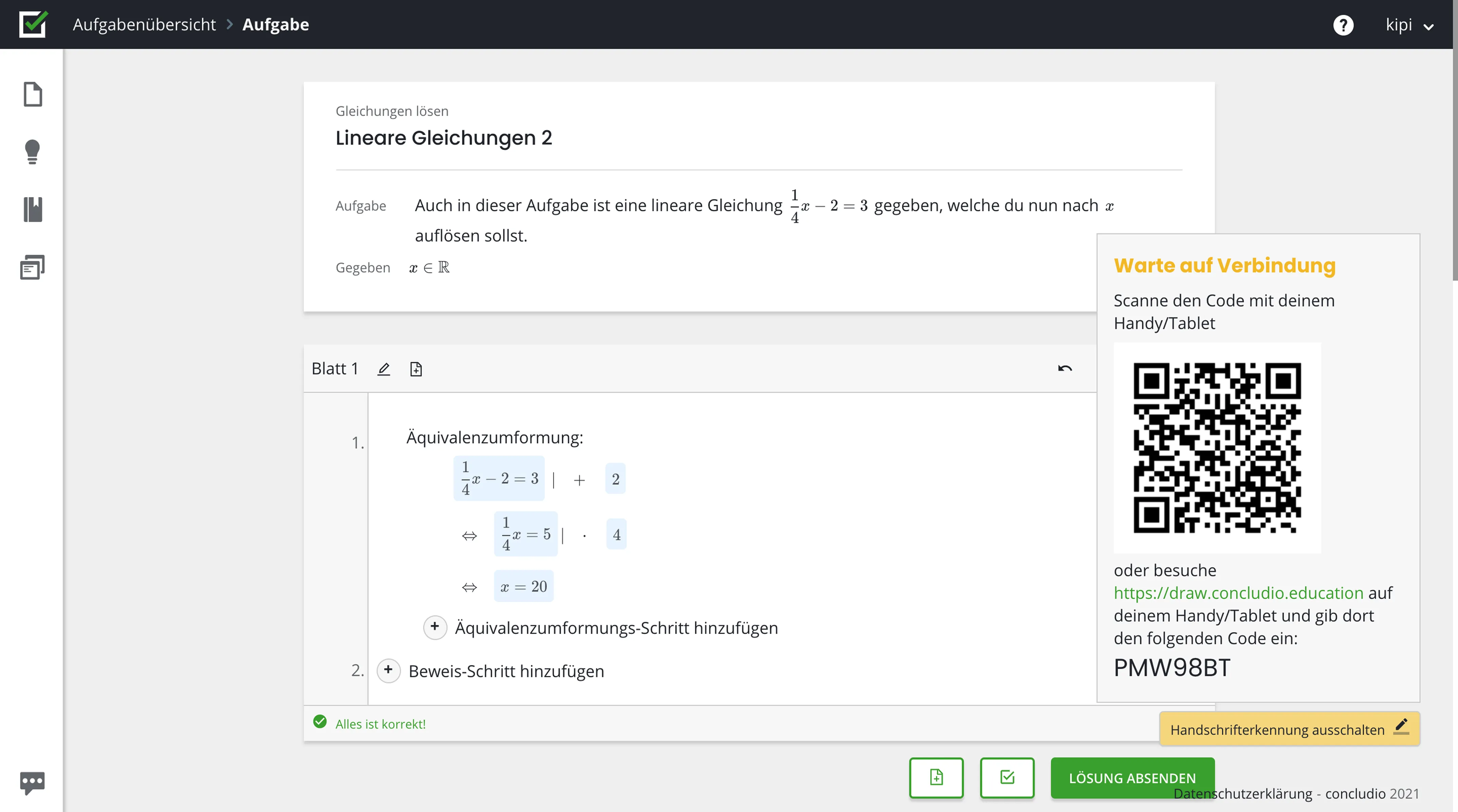
The unique selling point of concludio was that it offered an intelligent online math editor for solving mathematical exercises step-by-step and getting instant feedback on the solution.
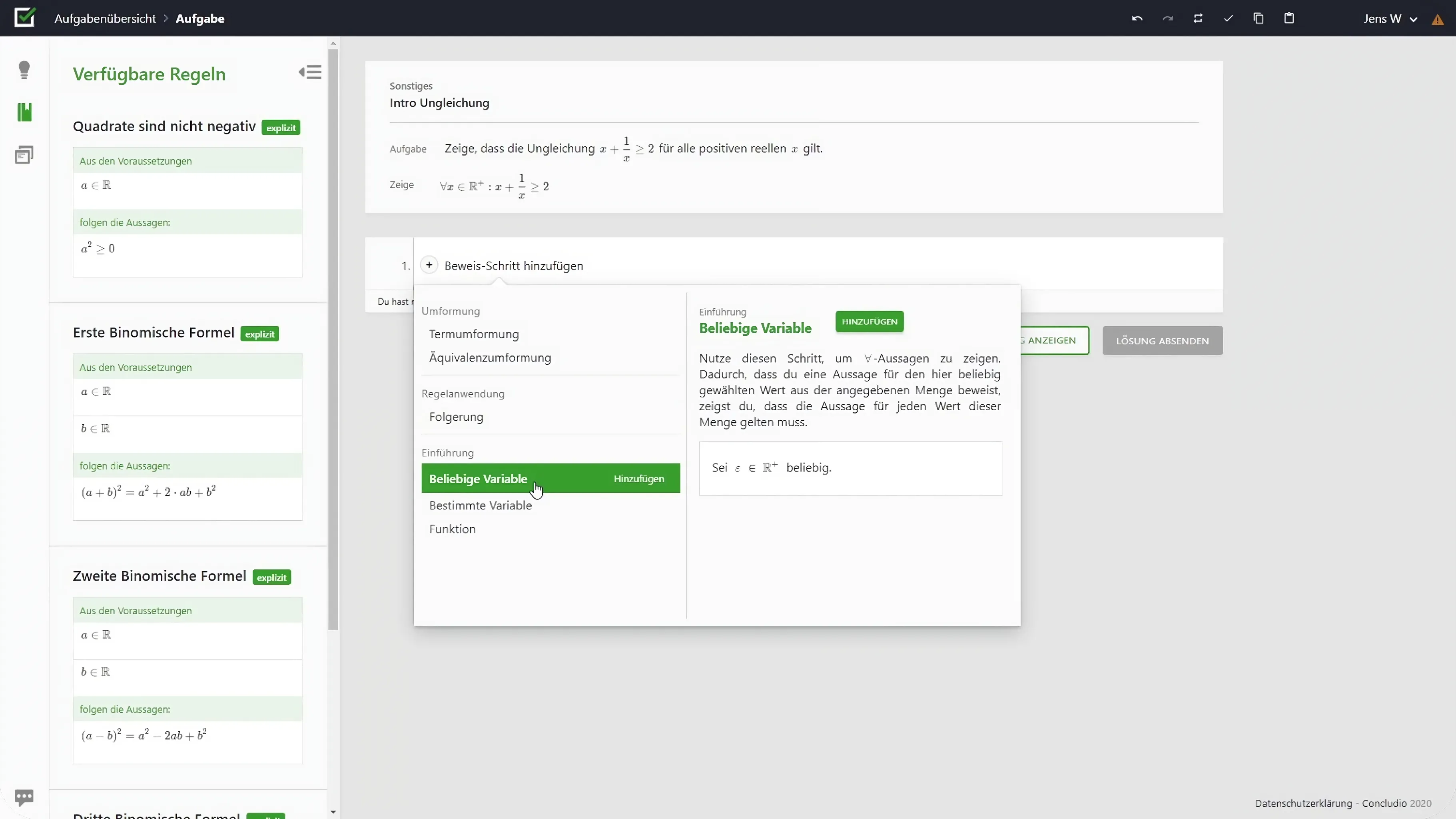 The concludio editor interface
I keep wearing multiple hats
As a duo, we embarked on the challenging journey that lay ahead of us. My co-founder with full stack development superpowers and myself, a multi-class hybrid monster, bringing together frontend programming, graphic design, and UX knowledge.
Make math easy for everyone?
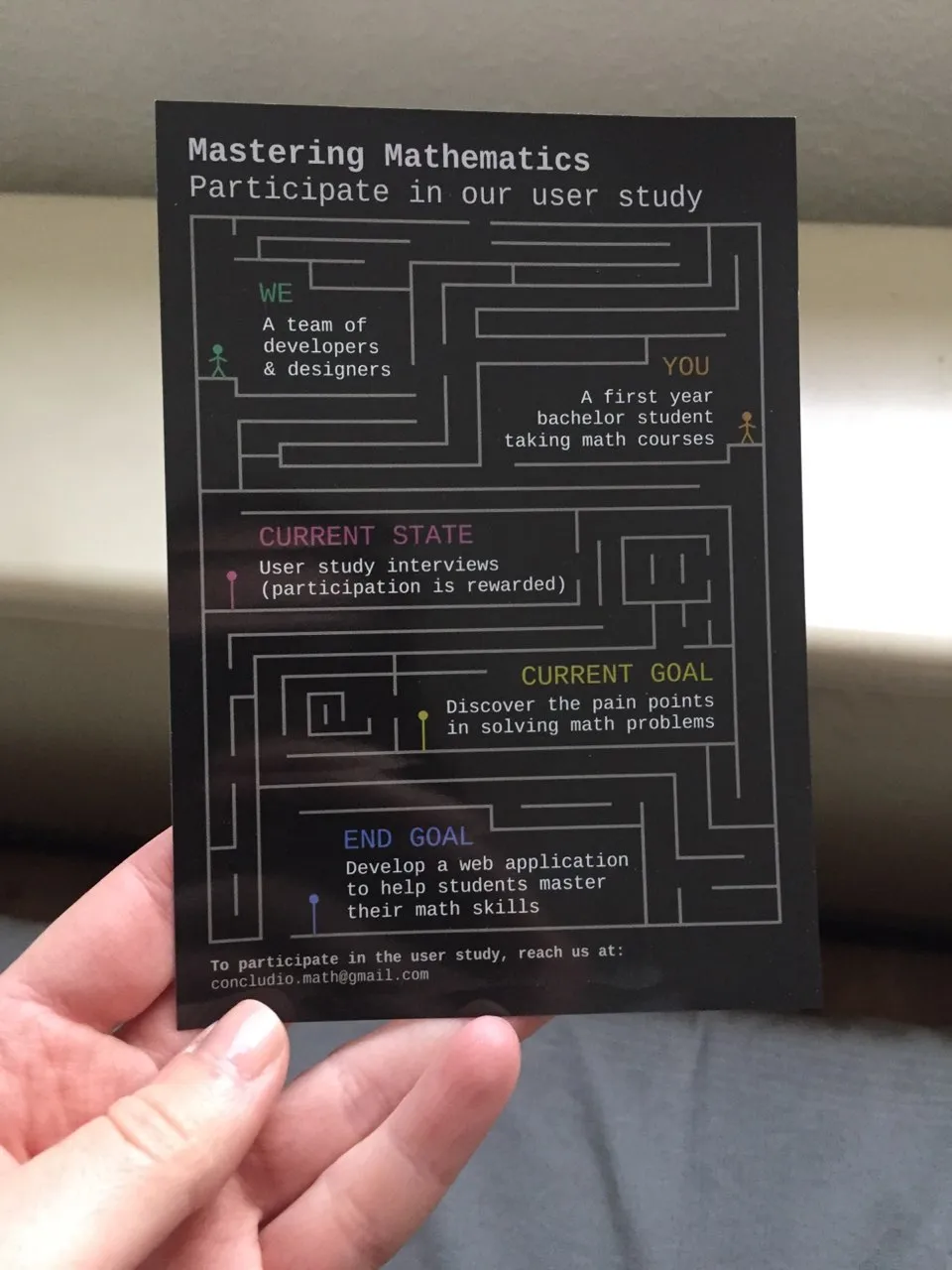
We targeted first year bachelor students who had math courses in their curriculum, i.e. anyone between “math sucks, but I have to do it” and “math rocks and I need more”.
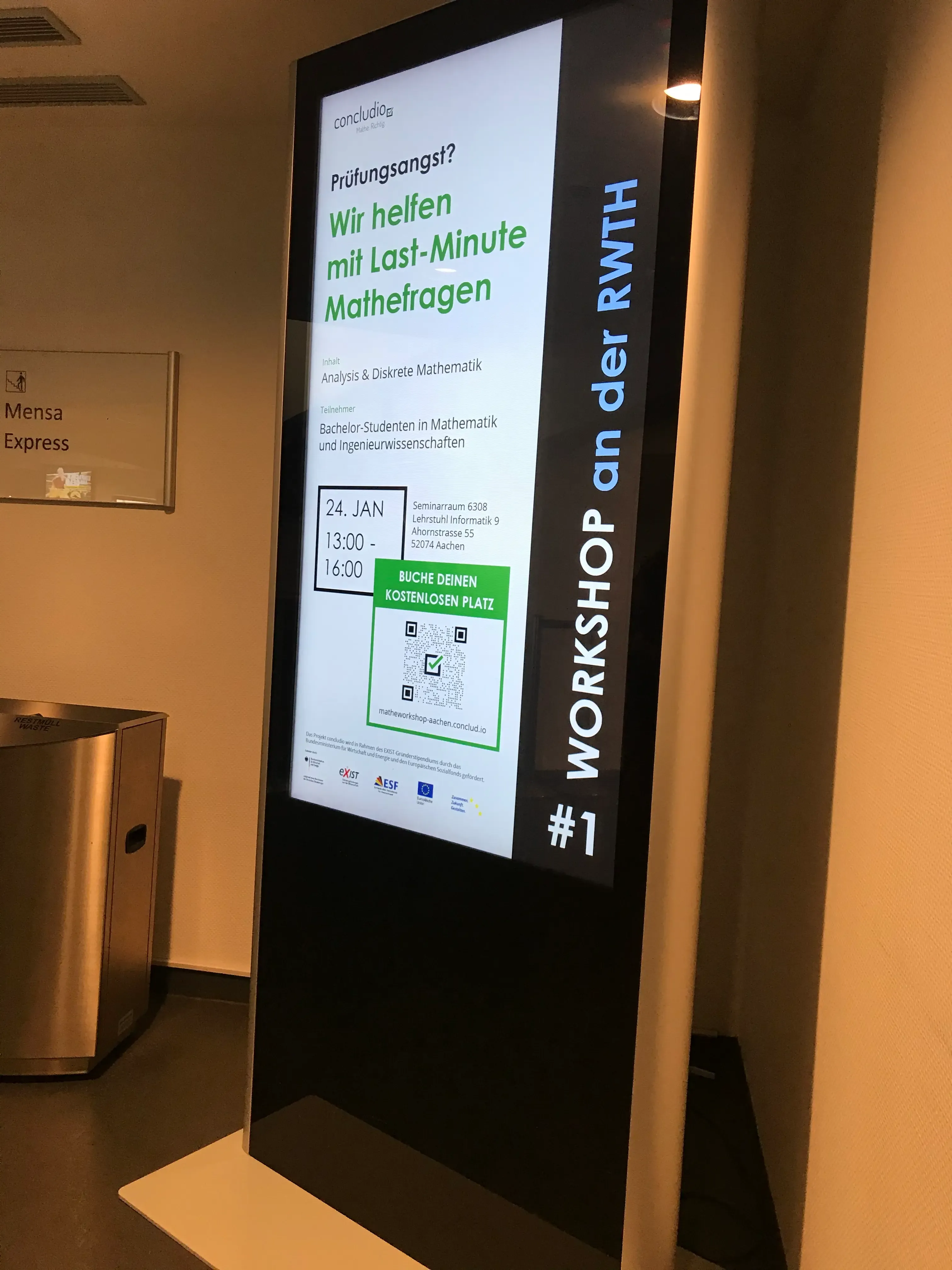
We had two reasons for focusing on this target group. Firstly, we wanted to start small and support only topics that were relevant for the first study year. Secondly, our market research indicated that the highest student drop-off occurred in the first year, so we aimed to decrease that number.
Our trial users are leaving us…
A key challenge we faced as a startup in our B2C segment was that nobody was converting. We were running Facebook and YouTube ads with a very low budget and they attracted a few dozen users. We offered them a 7 days free trial to try our product, which meant they had to provide their credit card upon registering. Our pricing model was charging 5€ monthly or 25€ for 6 months.
Quick, do something!
At this point in time, after a semester-long pilot at a university lecture, we had a solid product. One could already solve a variety of mathematical exercises in our editor and get instant feedback on the solution path.
I had my assumptions why our trial users were not converting, and that’s why the first step towards solving our problem was to test my assumptions via a churn survey.
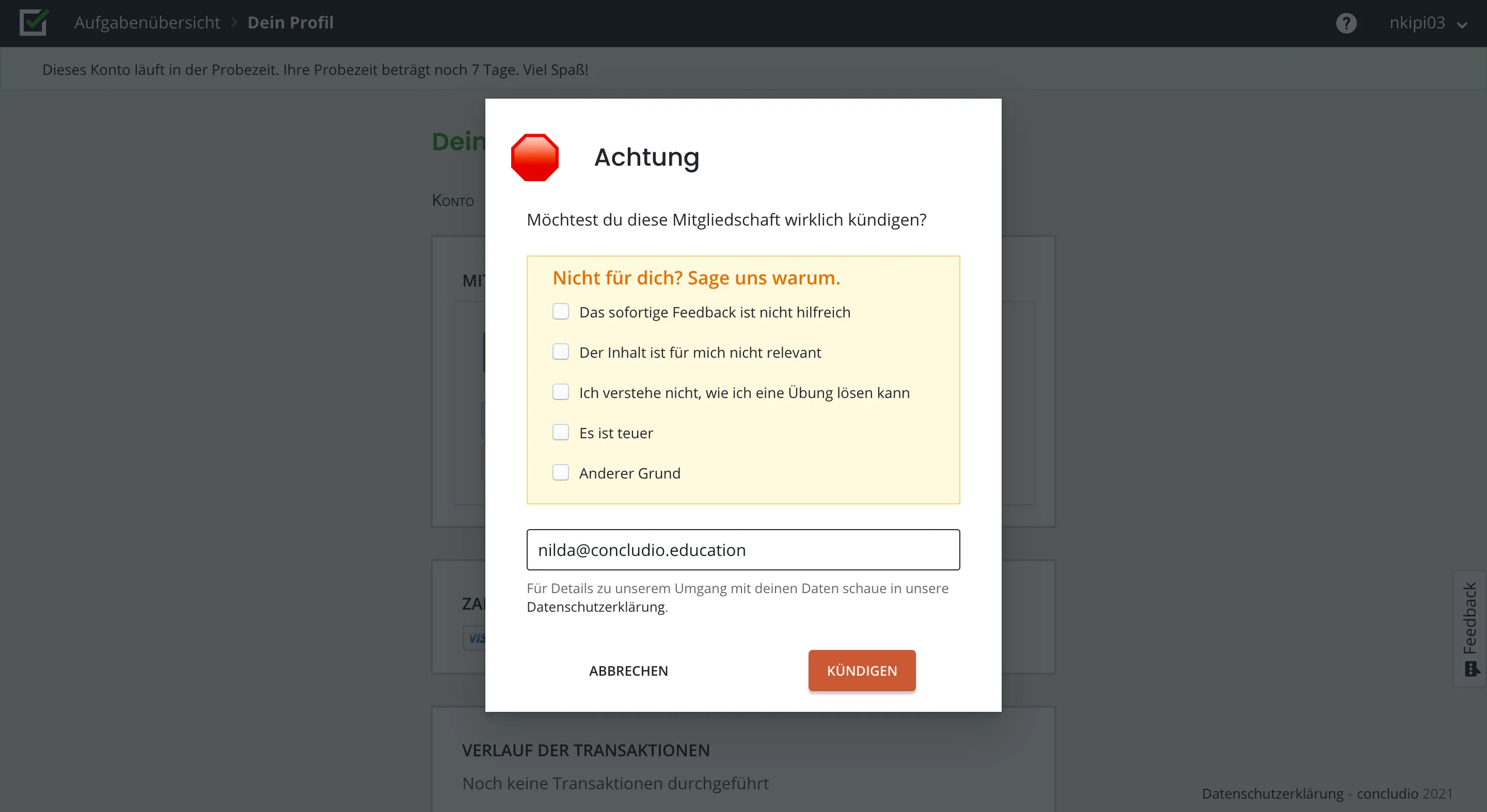 The churn dialog shown when a trial user cancelled their subscription. It sounds quite dramatic in retrospective 😅
The assumptions I tested were:
- The immediate feedback on the solution steps is not helpful
- The content is not relevant
- The user does not understand how to solve an exercise in our editor
- It is expensive
- The users could also give another reason
The top answer was the irrelevant content.
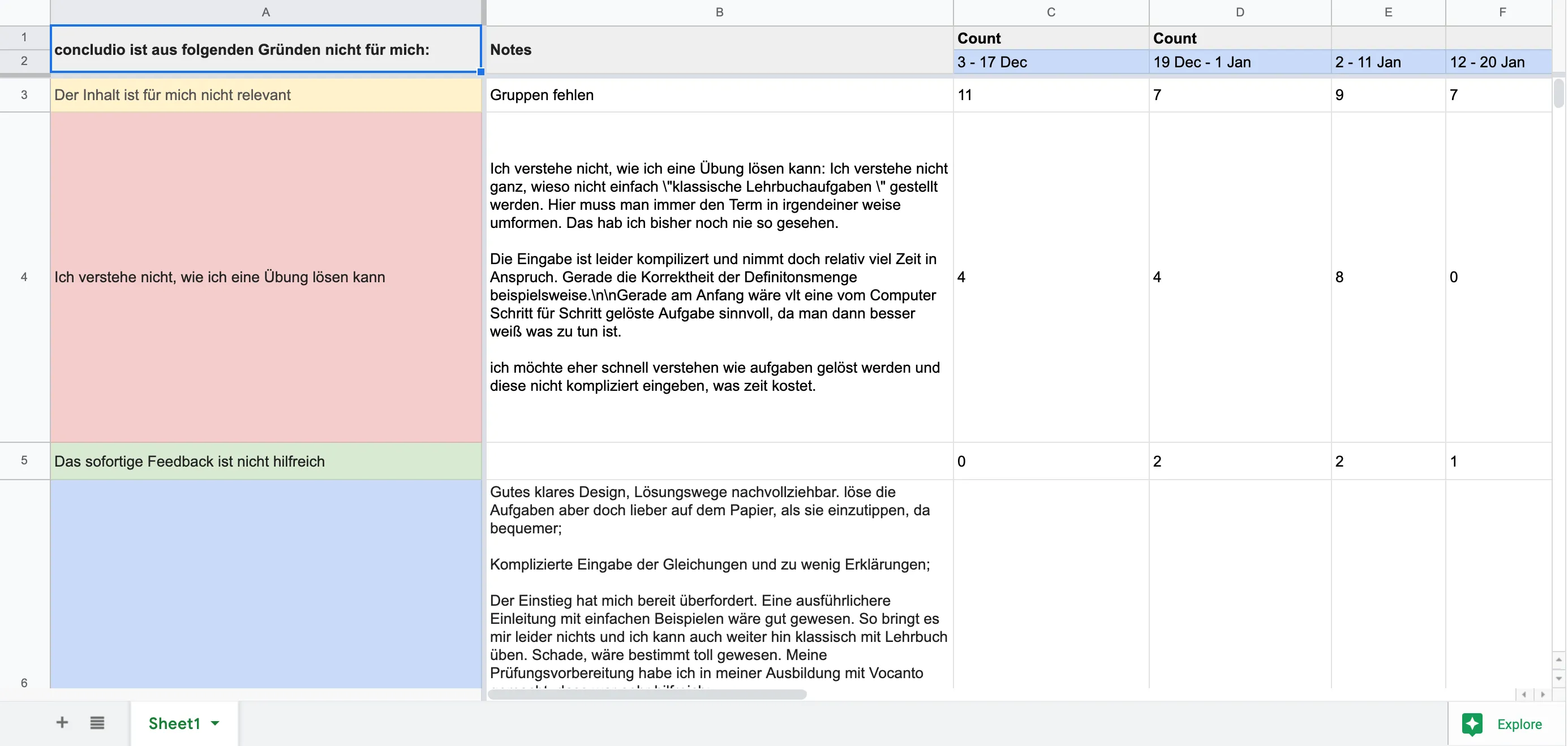 Churn survey results: The top answer was irrelevant content
The lean startup
We had only one scholarship year to collect proper funding and afterwards only three months of runway. Therefore, time was of the essence. Based on the user feedback, I prioritized solving the issues that were the most common answer, but also that were easier to tackle and would already bring a lot of value for us.
We jumped directly from identified problems to solution implementations so we could fail fast.
Validated assumption: Irrelevant content
The top issue was irrelevant content, hence I added a classic onboarding step to collect the topics our users would like to learn. Based on the topic popularity, we supported more and more math topics. This also indicated that our target group was broader than we initially anticipated.
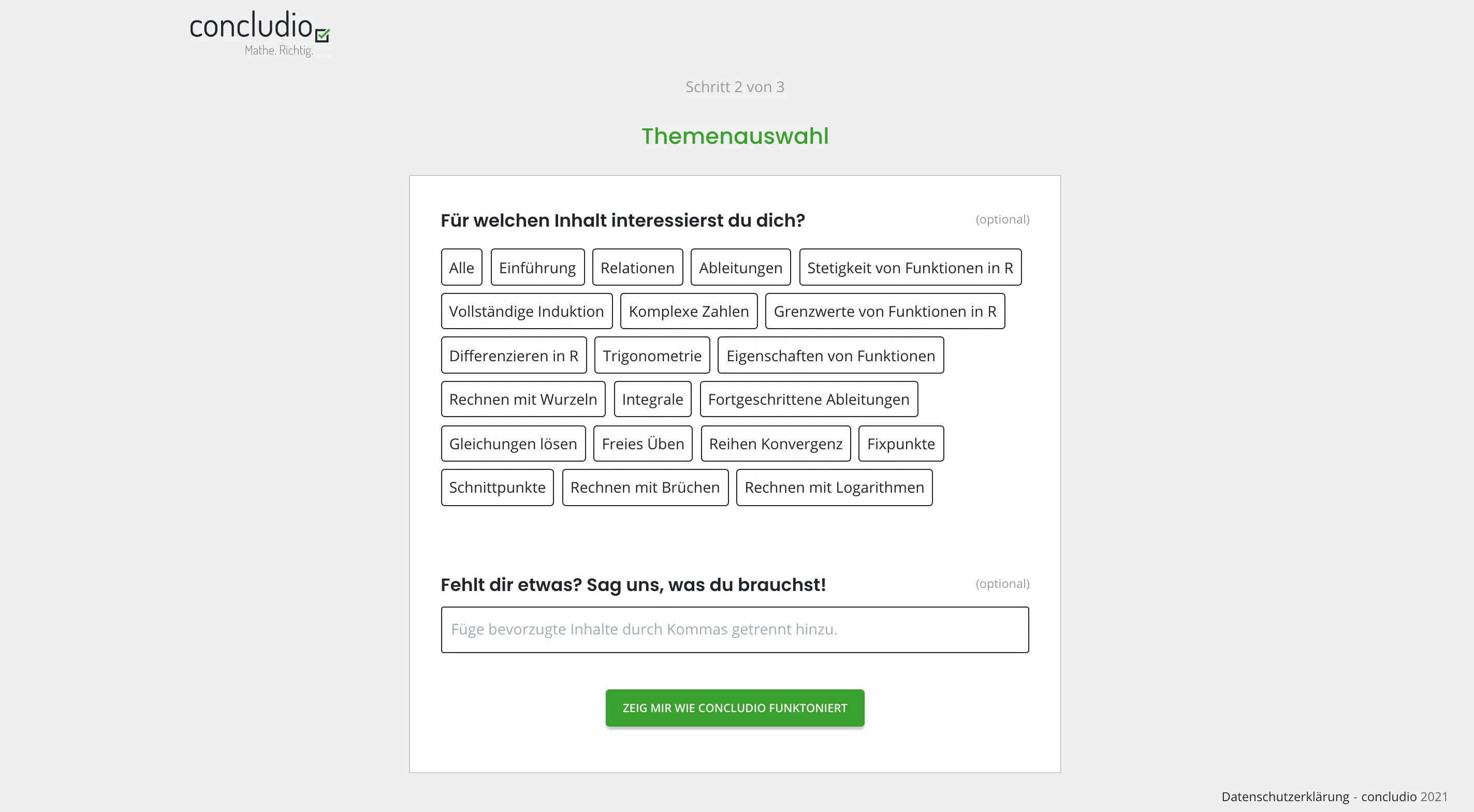 Onboarding step to collect the math topics users wanted to learn
Validated assumption: Difficulty in solving exercises
The second issue was the difficulty in solving exercises in our editor. Now, the real problem here was not straightforward. First off, it was difficult inputting a mathematical formula with a keyboard. We tackled this by adding handwriting support for mobile devices.
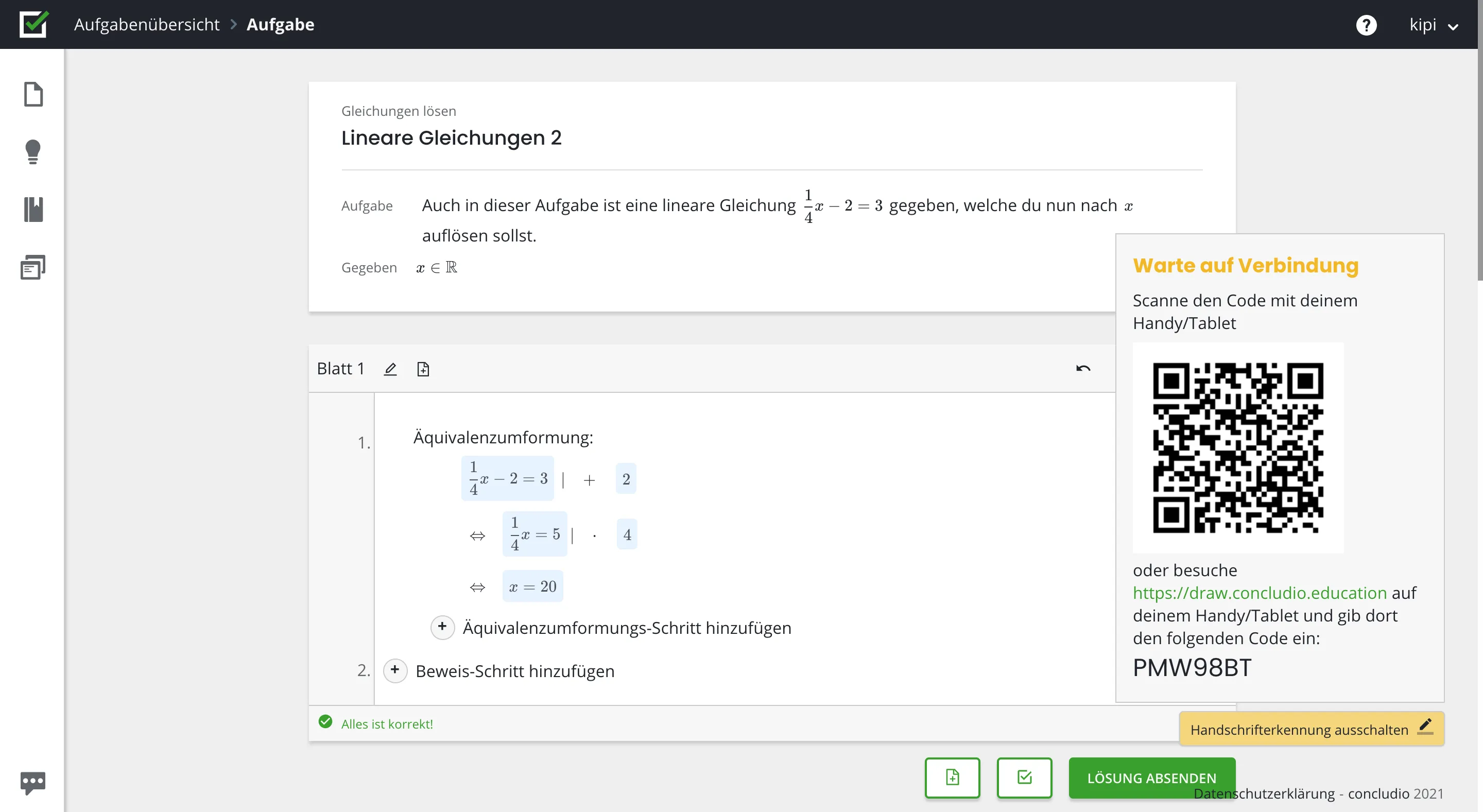 Handwriting support for entering mathematical formulas
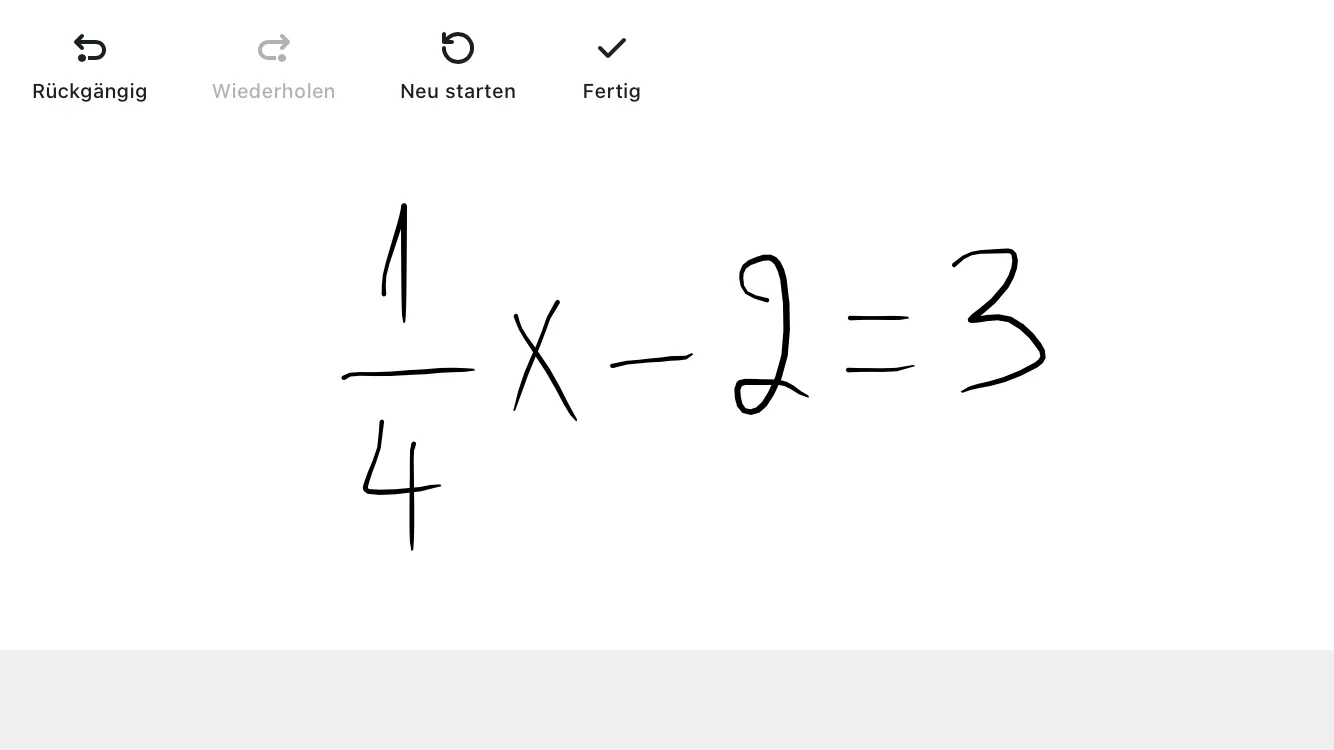 Handwriting support on mobile devices
On top of that, since we enforced quite a formal way of solving mathematical exercises, it was not easy for our users to understand what to do at each solution step. This occurred because of a lack of fundamental knowledge in math, which we aimed to address. To tackle this we added an explanation and an example for each step.
Additionally, we offered video tutorials for some of the exercises on how to solve them in concludio. This would teach them how to use concludio, but also how to logically solve the exercises.
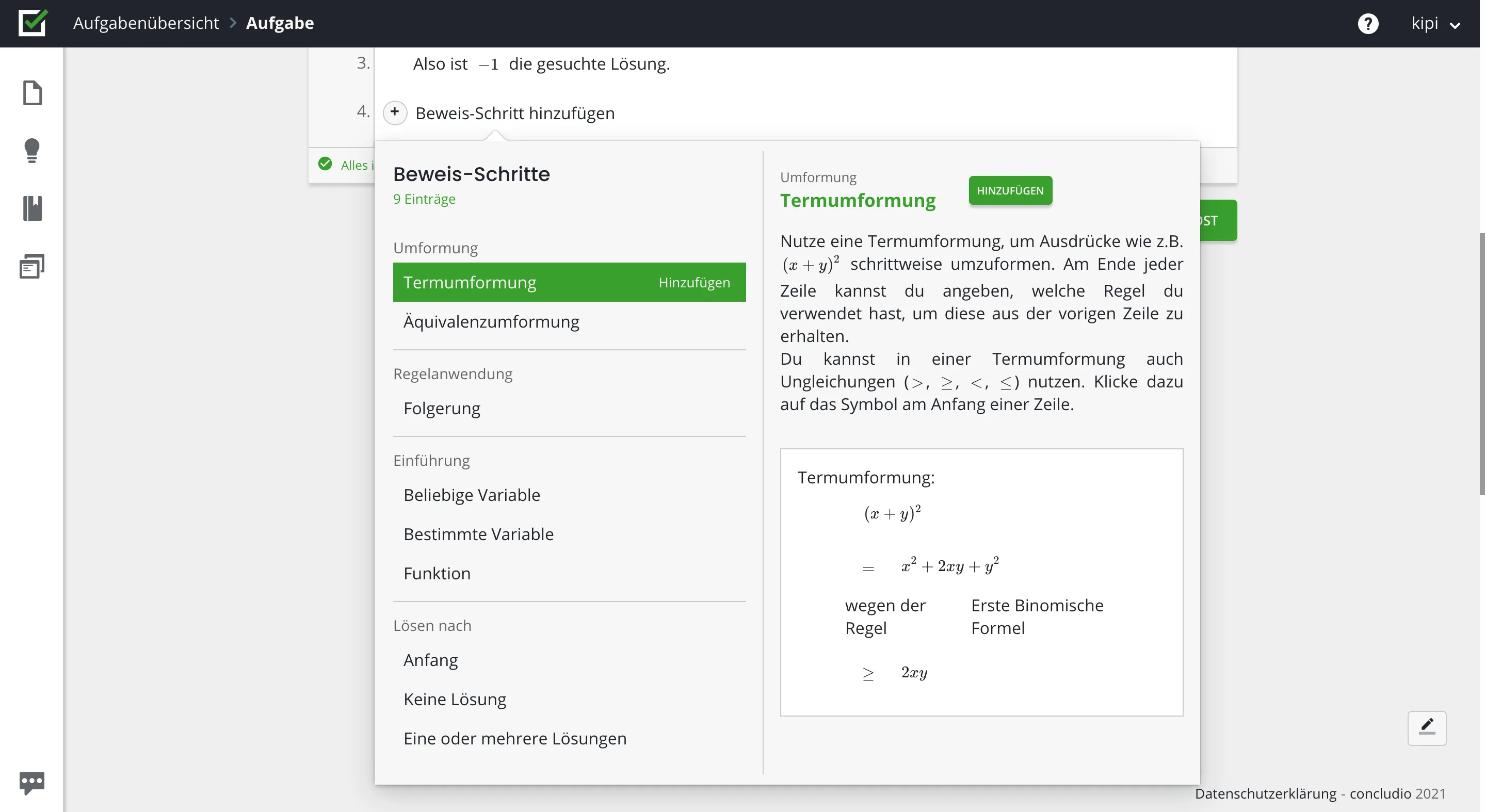 An explanation and example added for each solution step
The endgame
Through screen recording observations, I noticed that the mobile handwriting solution was not used at all, while the example explanations didn’t seem to guide our users in solving the exercises.
However, by supporting more desired math topics and adding tutorials on how to solve the exercises in concludio, we managed to convert 10 users. It was obviously not enough to sustain us, but it was hope!
After one year of scholarship funding and three months of runway, we had to shut concludio down.
Reflections
If I were to do the product again, instead of spreading thin, I would:
- Discover the desired topics first.
- Support only these topics perfectly.
As for the business side, I would:
- Try harder at securing funding because we really sucked at it.
- Go open-source to get outside help for supporting math topics.
Other work
Paulina24Increasing conversion rates through deep funnel analysis
The startup saga continues. The heroine is back to save the day.
KironEnabling learners to organise their e-learning experience
Working at Kiron has been fulfilling, challenging, transformative.
kiwiVisualizing UI pattern relations through interactive prototypes
My master's thesis marks the beginning of my UX design career.